
New construction photos show real progress on Monstropolis at Disney’s Hollywood Studios, with the land’s clock tower now standing and functioning, and Walt Disney Imagineering has confirmed new details about the land’s design and its main thoroughfare, Dark Avenue, in a new We Call It Imagineering episode.
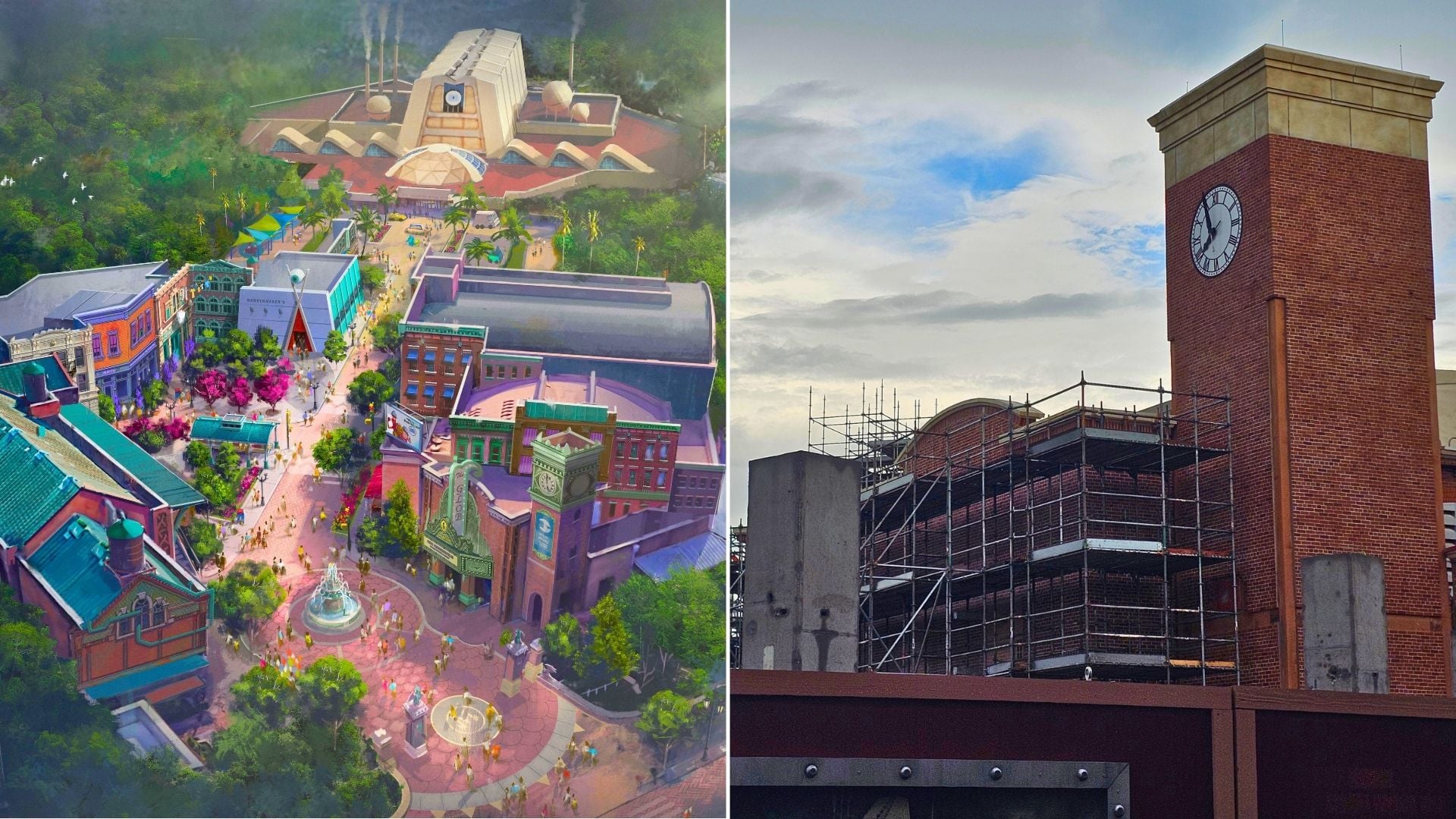
This builds on our D23 2026 coverage of the Glob Theater and Harryhausen’s announcements, and it comes a day after we covered the new parkitecture episode, which goes deeper into the architecture behind several lands under construction right now, Monstropolis included.
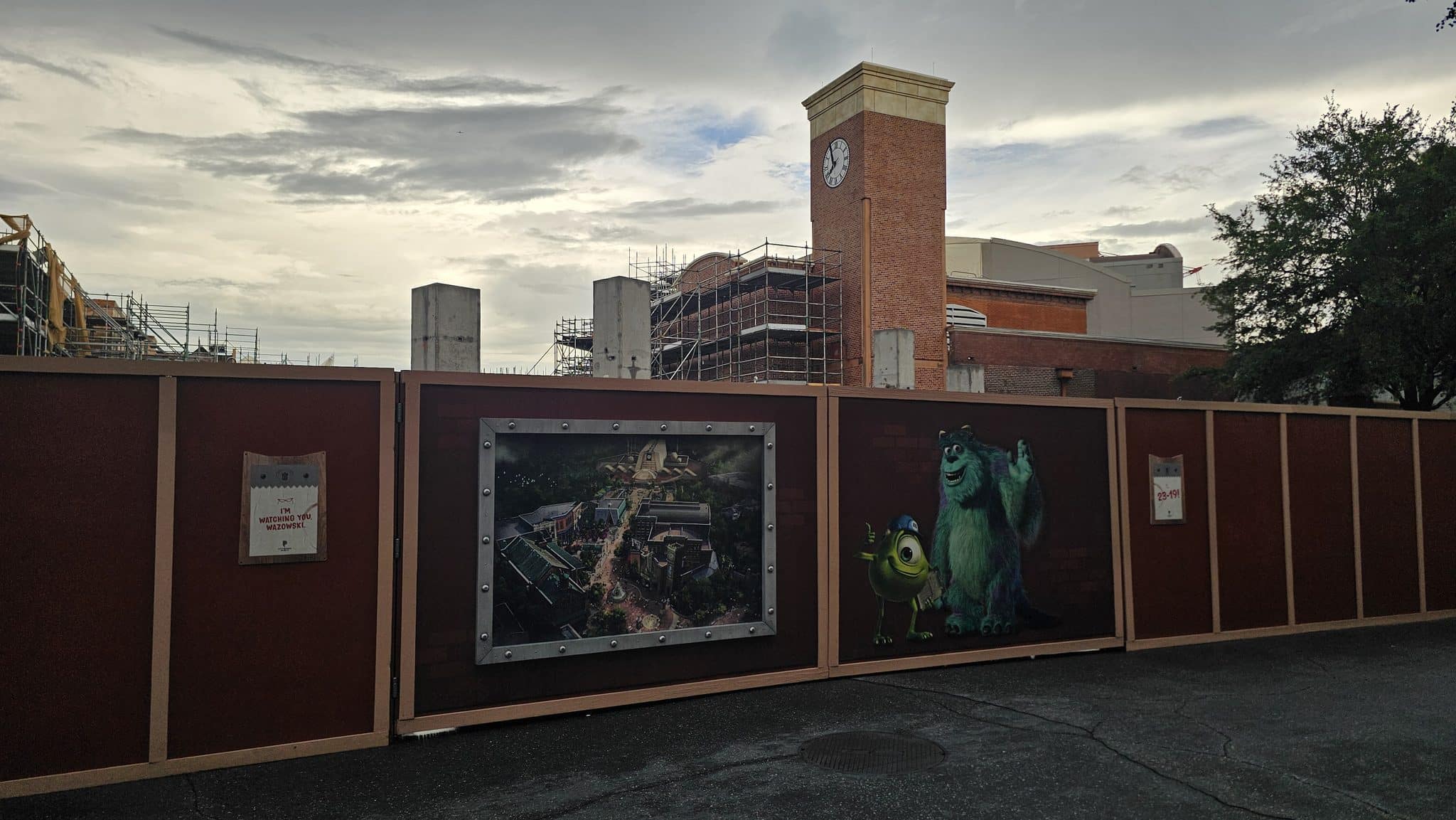
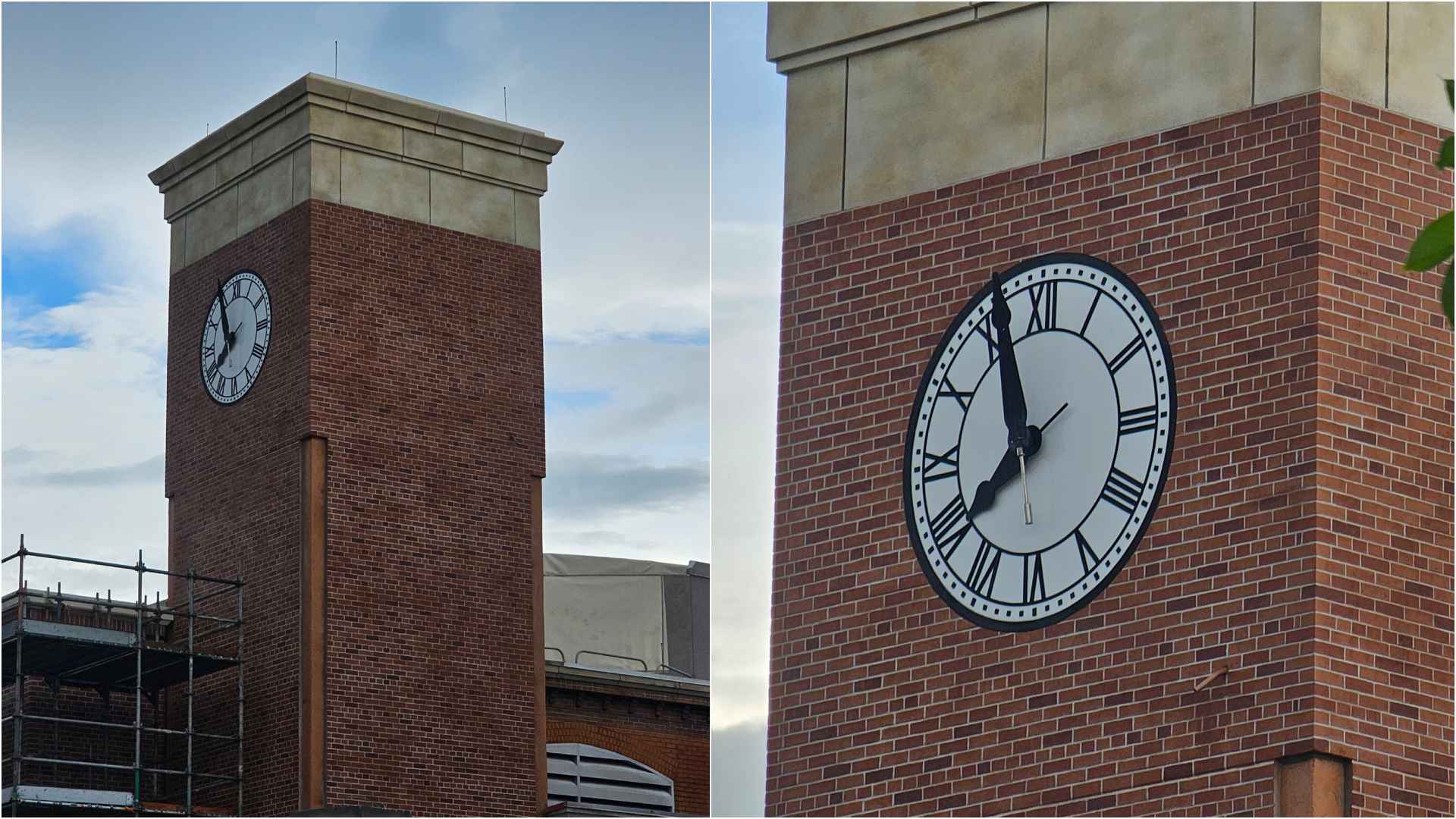
The clock tower is the most visible landmark on site, standing at the same footprint as the old Muppets Courtyard clock tower and now showing a working clock face set into brick. It’s still unthemed for the moment, but there’s a rope or pendulum-style rigging still hanging off the tower, and it looks a lot like the same rig Gonzo used to hang from during the old Muppets stunt show days. The fact that it’s still up rather than removed makes us think something new may be getting attached to that same spot once the land’s theming goes in.
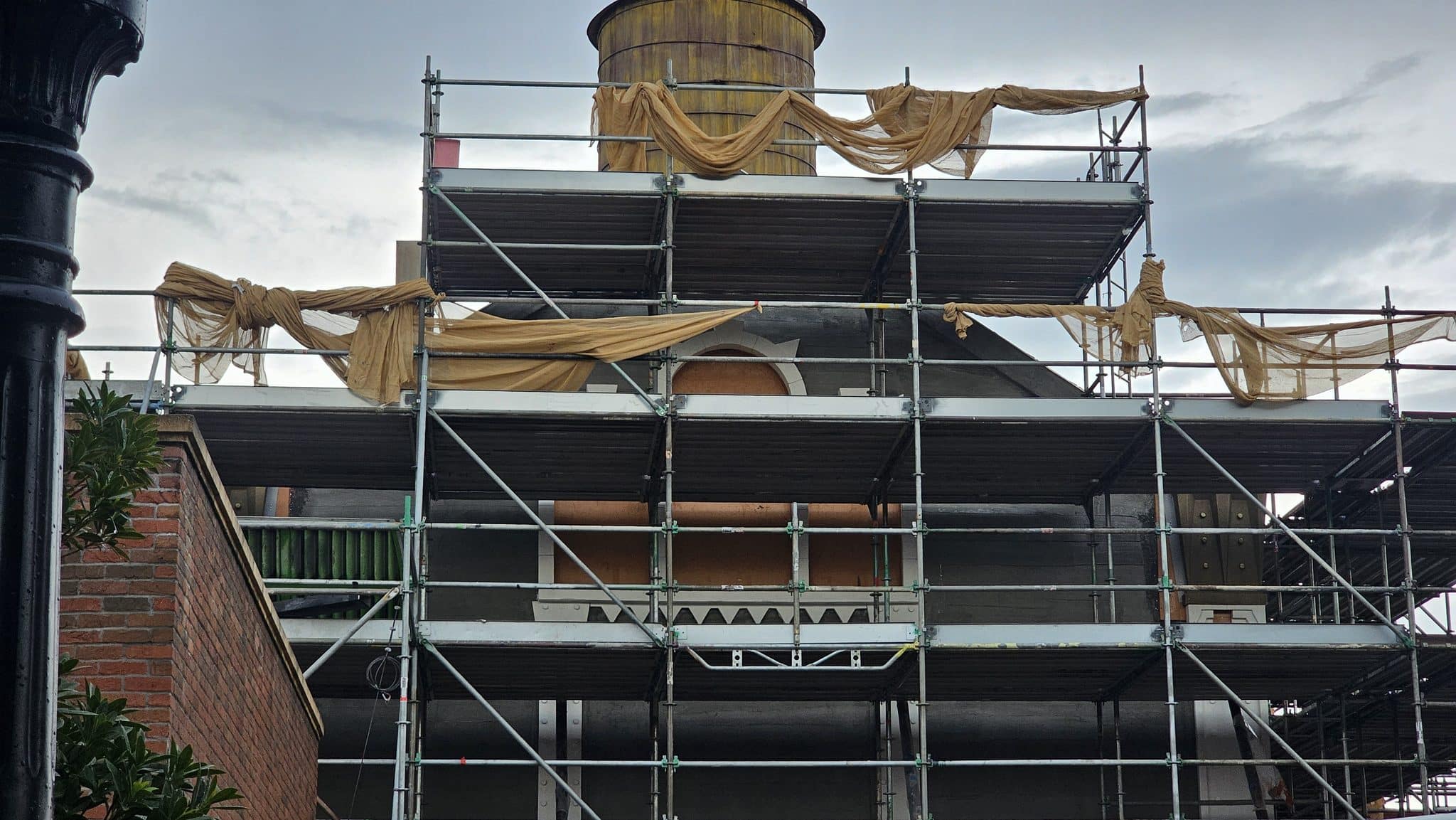
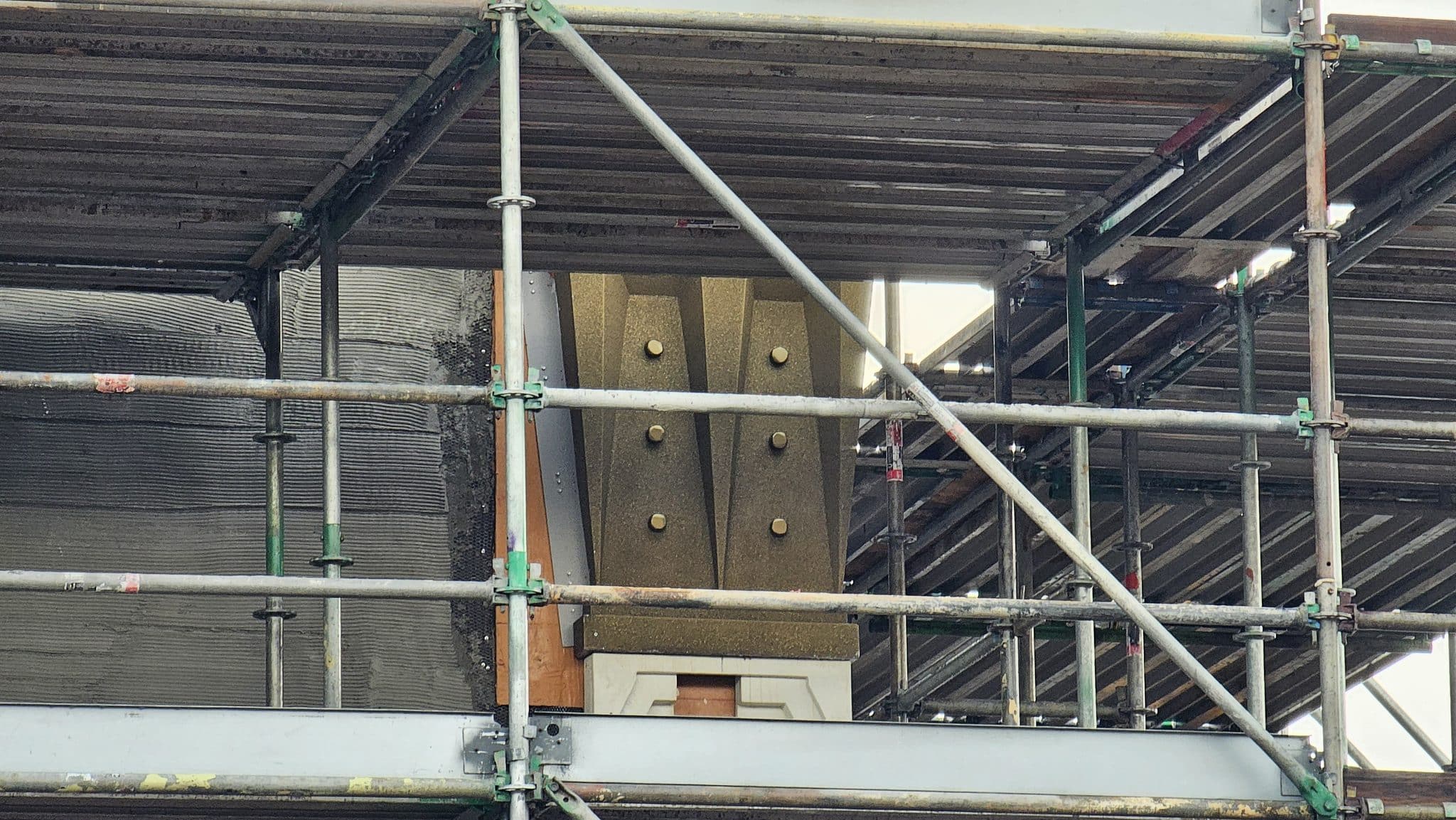
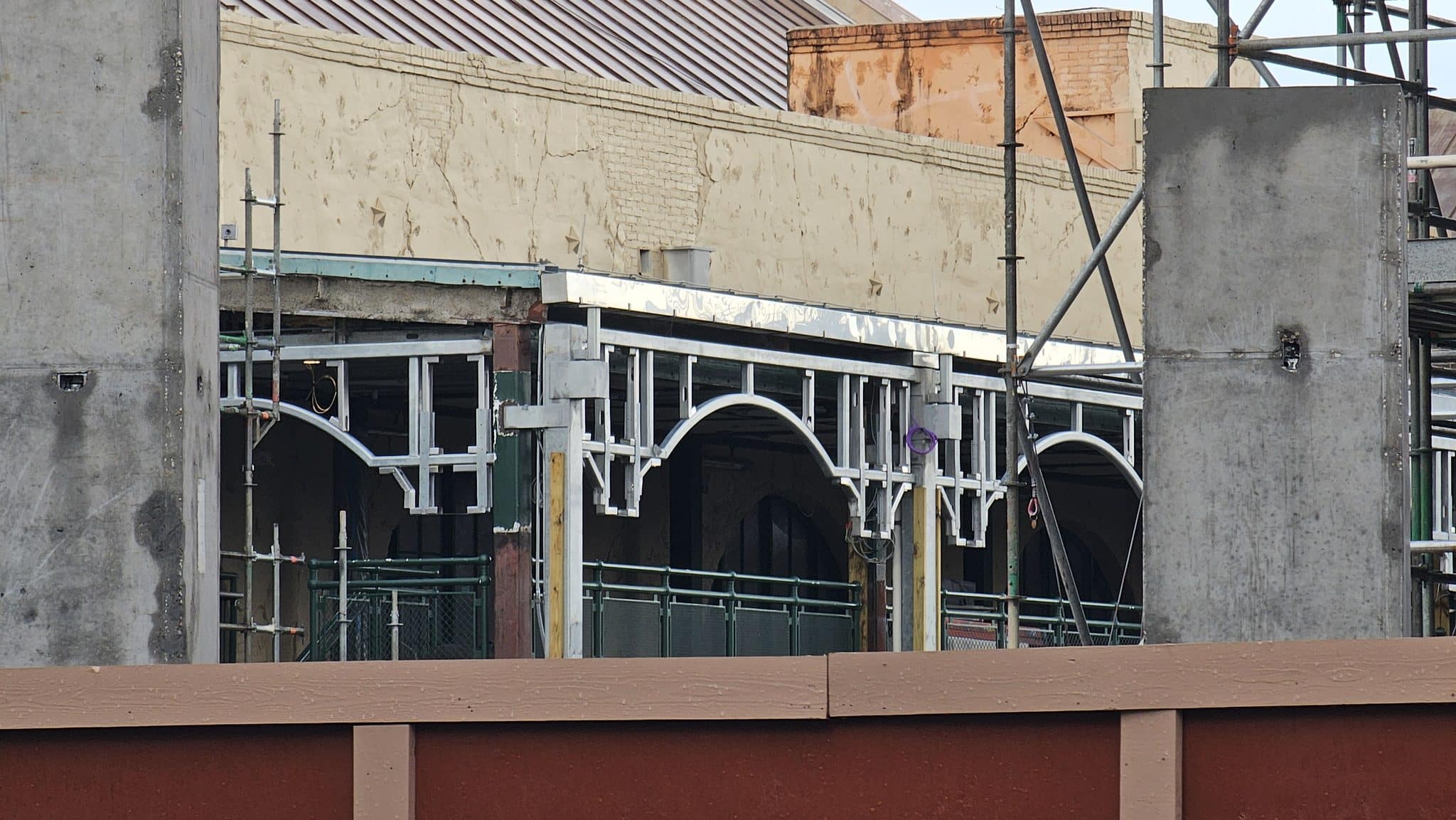
Around the rest of the site, ornamental rockwork and cornice detailing are going up on a black brick facade section, with arched window openings now framed out and white trim details taking shape. Sections of the building are still wrapped in gold protective fabric, and a wooden barrel-shaped structure is visible near the roofline of one building, likely a decorative rooftop element once its scaffolding comes down.

The new We Call It Imagineering episode adds real substance to what’s rising behind those walls. Imagineers confirmed the land’s main street is called Dark Avenue, leading guests toward the Laugh Factory, the show building that will house the land’s suspended door coaster. Dark Avenue is also home to Harryhausen’s, Archie’s Scare Pig Pizza, the Monsters University Alumni Club, and the Scareporium.
Rather than recreating buildings straight out of the films, Imagineers said they’re designing Monstropolis as a real, lived-in city that could have organically grown over time, one that just happens to be built for monsters rather than humans. That means working pillars, horns, and teeth into the architecture itself, and letting the diversity of the monster world influence details as specific as doorway sizes and structural engineering. The team also touched on sensory design beyond the visuals, including sound work like a storm drain that echoes the beat of a nightclub playing somewhere nearby.
Imagineer Michael Hundgen said the project is set to “really raise the bar” for Walt Disney World, crediting a passionate team that’s worked through some genuinely difficult challenges to get here. He also previewed the menu at Harryhausen’s, describing a lineup of sushi rolls and tempura dishes named after the monster world the restaurant is themed around, and spoke about how the Welcome to Monstropolis show blends immersive theater and optical illusion techniques with real physical elements, so guests can’t easily tell where the illusion ends and the built environment begins.