

Epcot’s Giant Aquarium Hits 40: From High-Tech Research Lab to Finding Nemo. Forty years ago, Disney opened a massive saltwater tank in the middle of a Florida theme park. At the time, it was the biggest indoor environment of its kind in North America. Today, the pavilion known as The Seas with Nemo & Friends is still one of the world’s largest aquariums, but its mission has shifted from 1980s sci-fi to real-world animal rescue.
When the pavilion first opened on January 15, 1986, it was called The Living Seas. Disney didn’t just want people to look at fish; they wanted guests to feel like they were visiting an actual underwater research base called Seabase Alpha.
Back then, you didn’t just walk in. You boarded “hydrolators”—elevators that used vibrating floors and bubbles to trick your brain into thinking you were dropping deep under the ocean. Once inside, you saw curved windows and a massive 5.7-million-gallon tank.

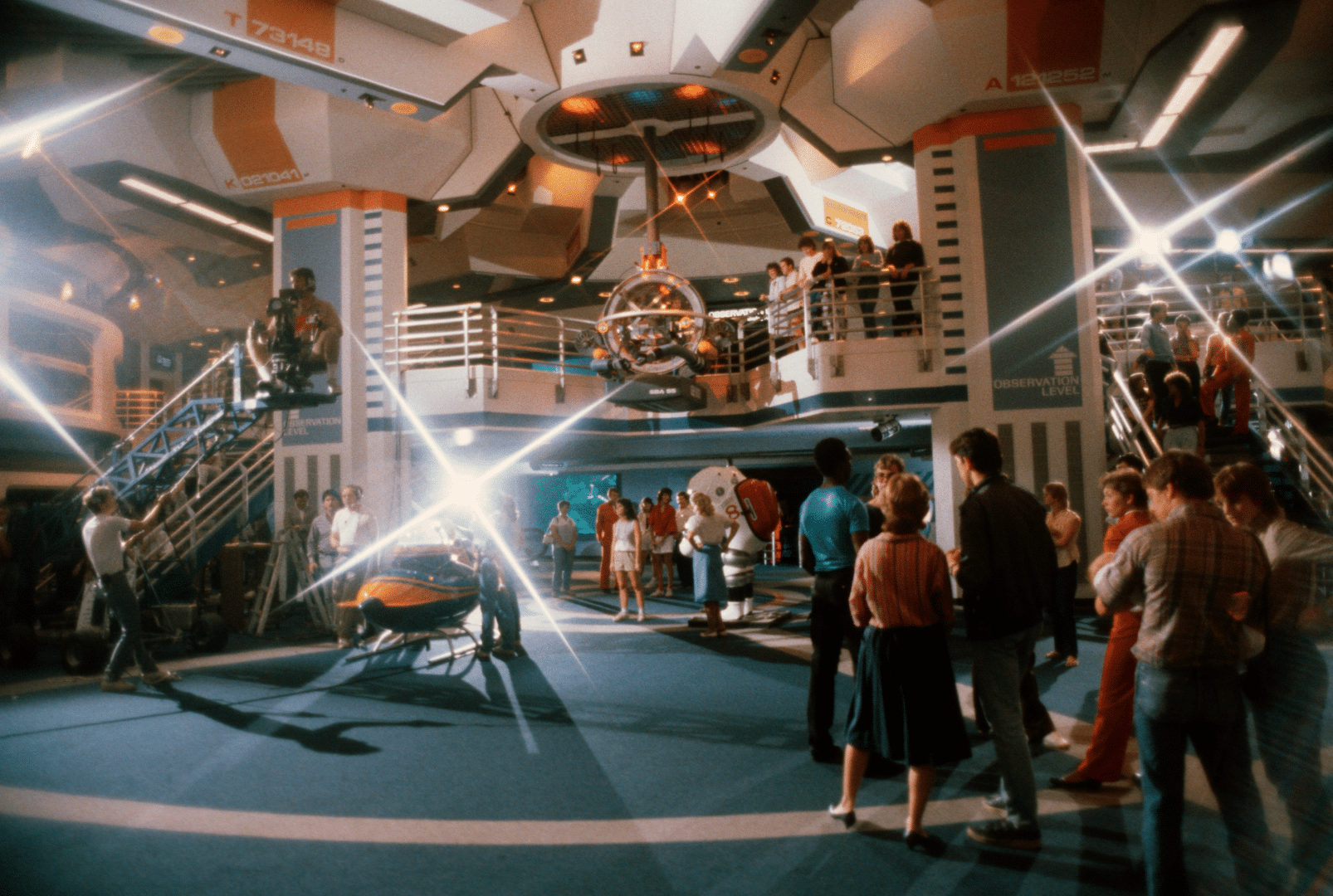
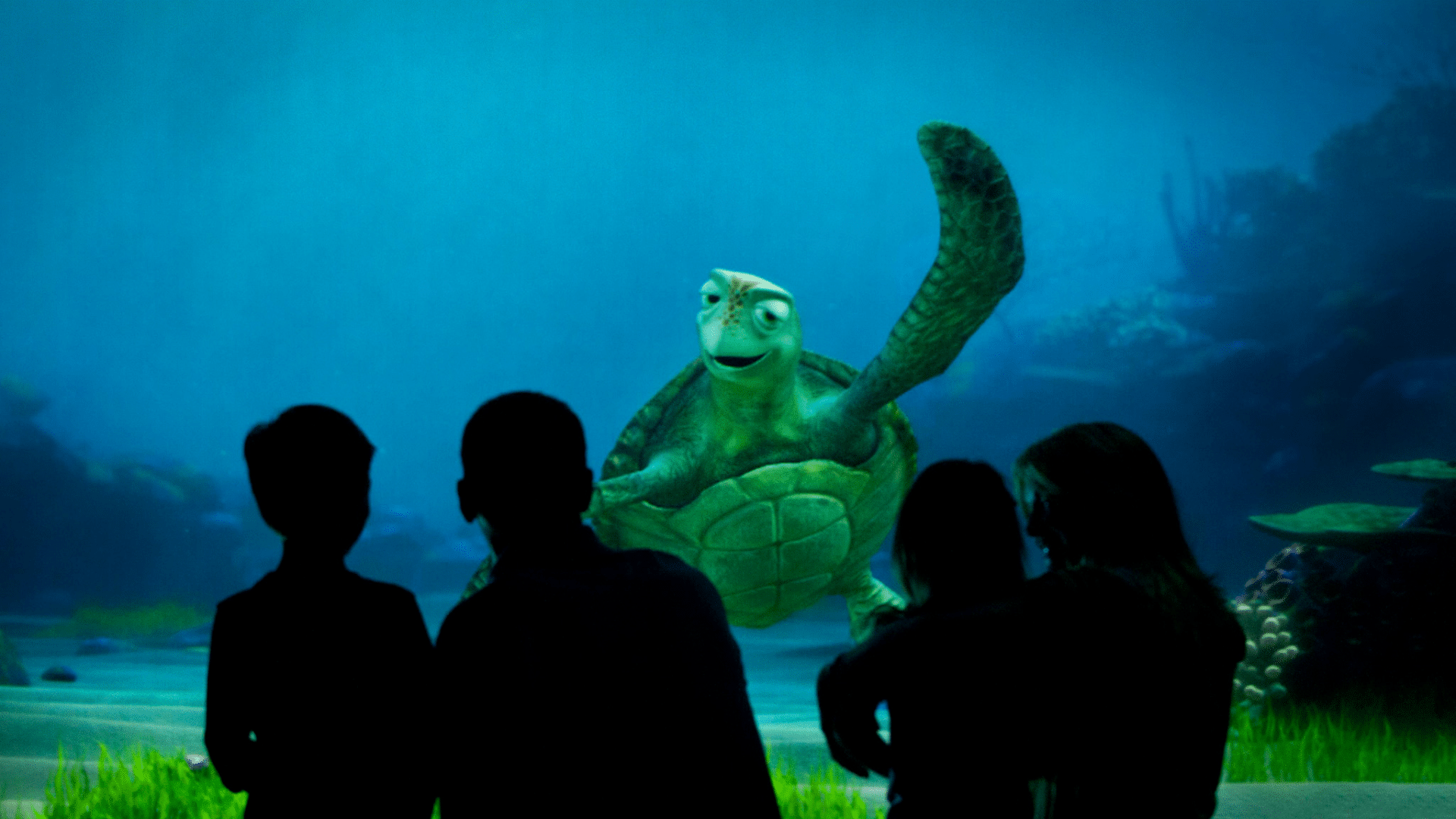
The tech was a big deal. The team had to invent their own saltwater mix and a “reverse-flow” filtration system to keep the water clear. In 2004, they added Turtle Talk with Crush, and by 2007, the whole place was re-themed around Finding Nemo.
While most people visit to see the Nemo animatronics or eat at the Coral Reef Restaurant, the pavilion is actually a working hospital. There are about 2,000 animals living there across 90 different species.
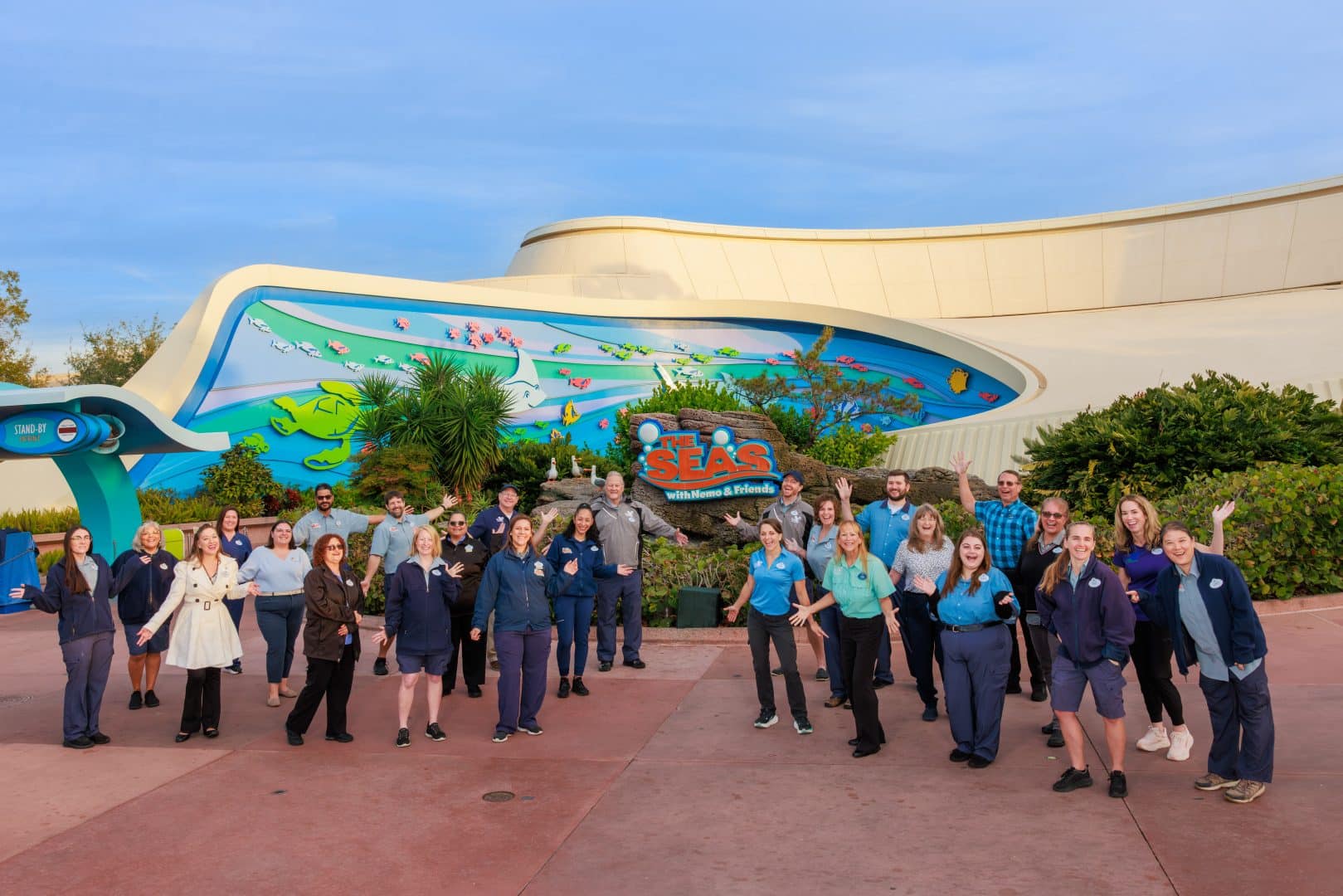
The staff includes vets, nutritionists, and divers who handle everything from routine checkups to surgery on tiny fish.
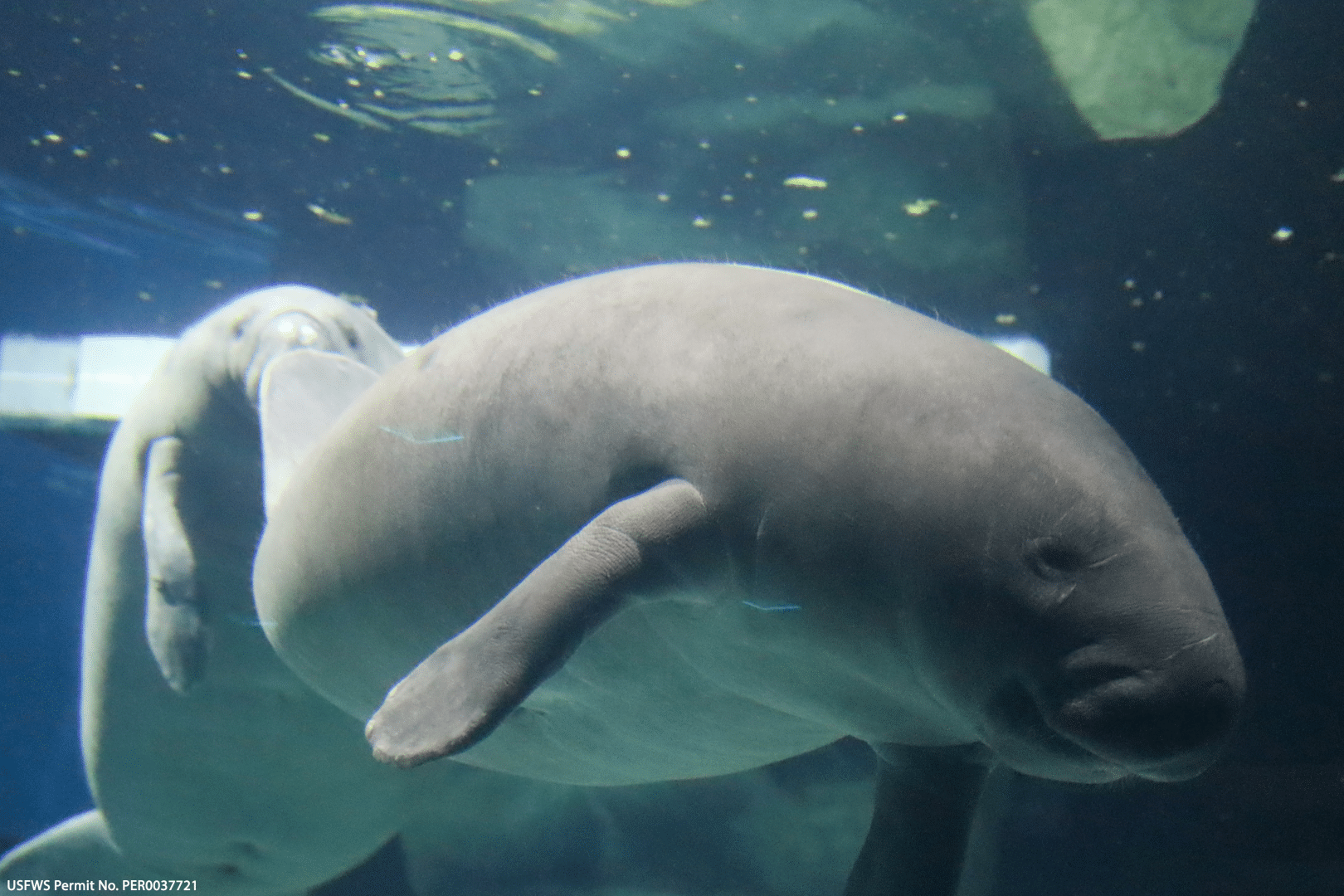
- Manatee Rescue: Disney works with a national partnership to help manatees. So far, they’ve helped 30 of them get back into the wild.
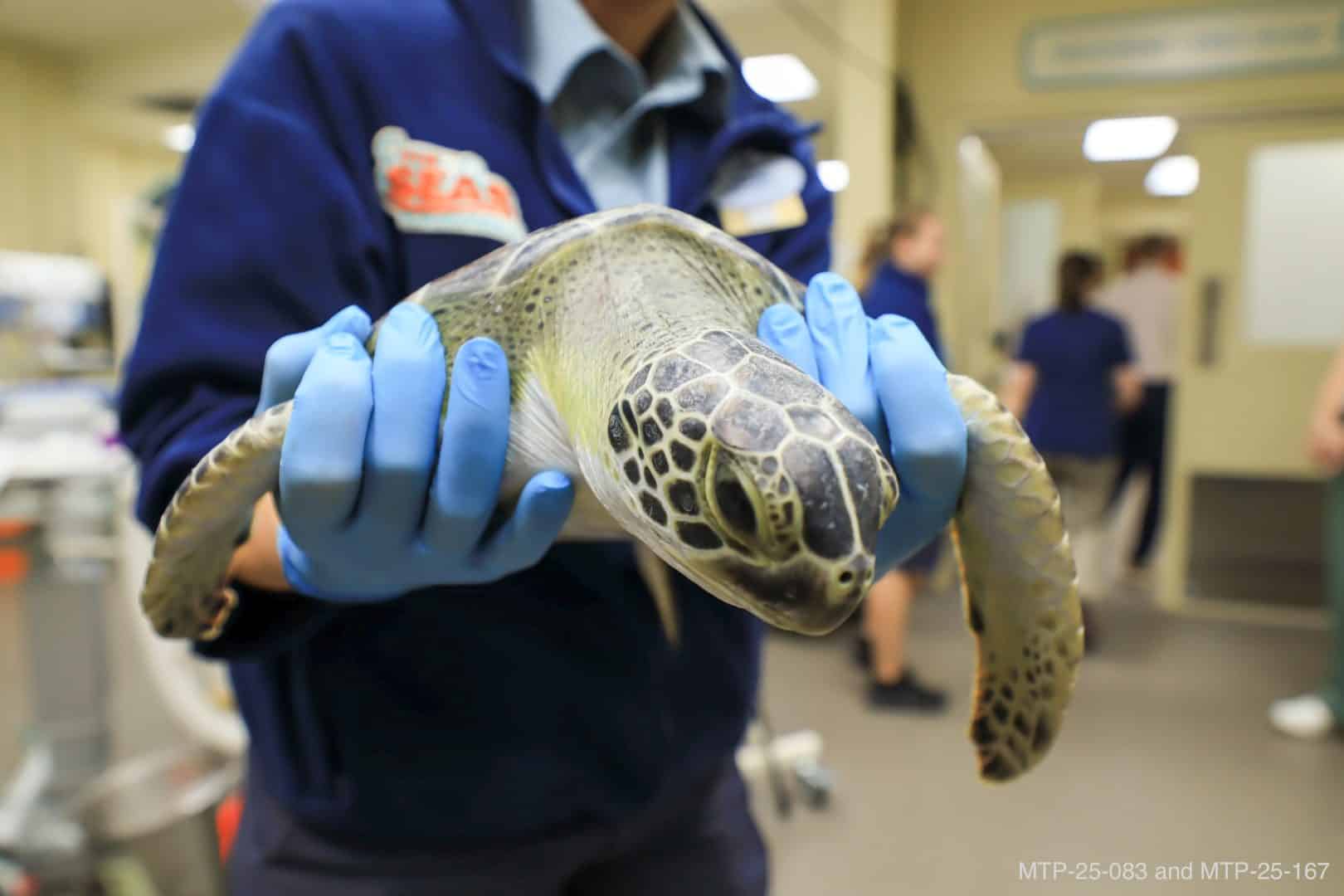
- Sea Turtles: The team has treated and released over 350 turtles that were sick or injured.
- Coral Reefs: Scientists here are growing coral fragments to plant back into the ocean in places like the Bahamas to help struggling ecosystems.
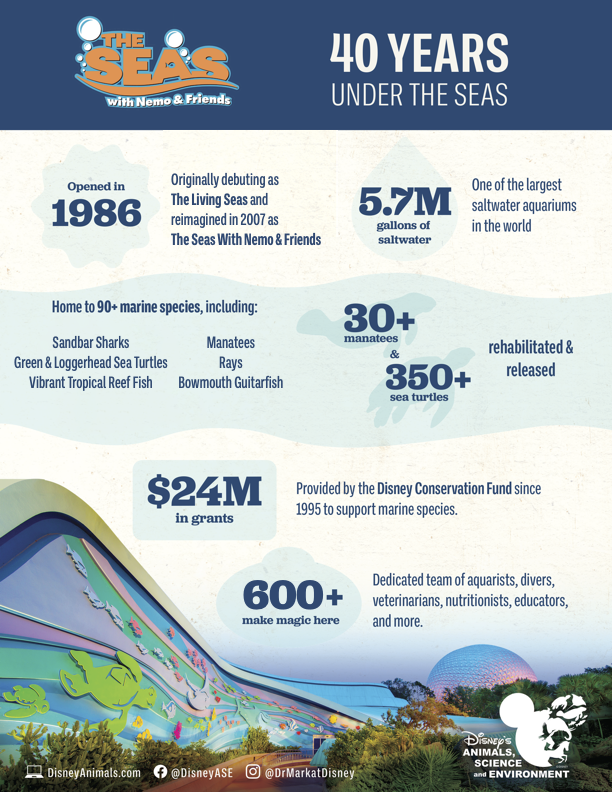
The Disney Conservation Fund is hitting its 30th year. Out of the $132 million they’ve spent on wildlife, about $24 million has gone specifically to marine life like manatees and coral.
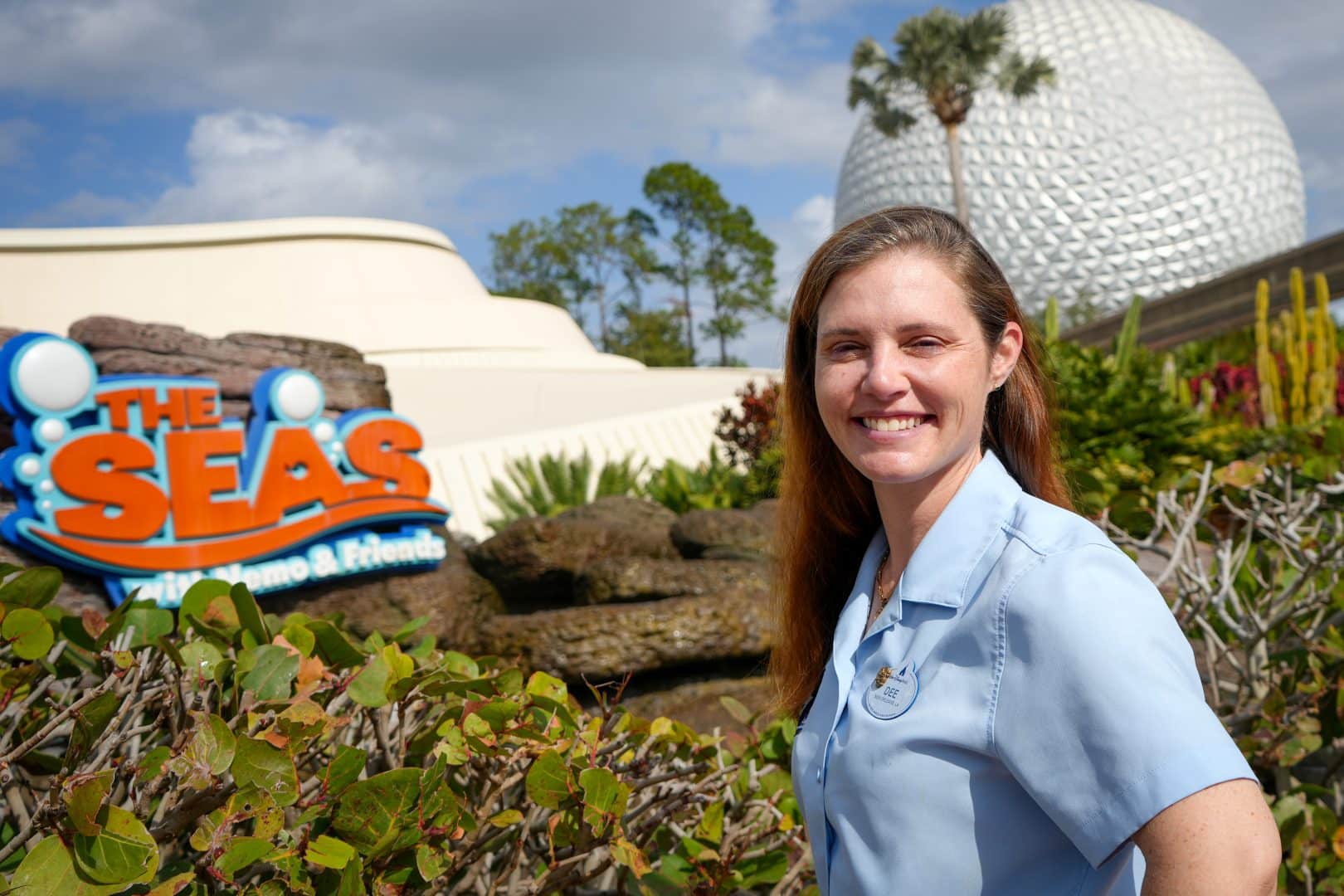
For the people working there, the hope is that seeing a shark or a sea turtle up close makes guests actually care about what happens to the ocean. As Dr. Geoff, the pavilion’s operations director, puts it: the next generation of people who will save the oceans probably starts with a kid looking through the glass at EPCOT.

Follow Disney’s Animals, Science and Environment on Facebook and Dr. Mark on Instagram.
