
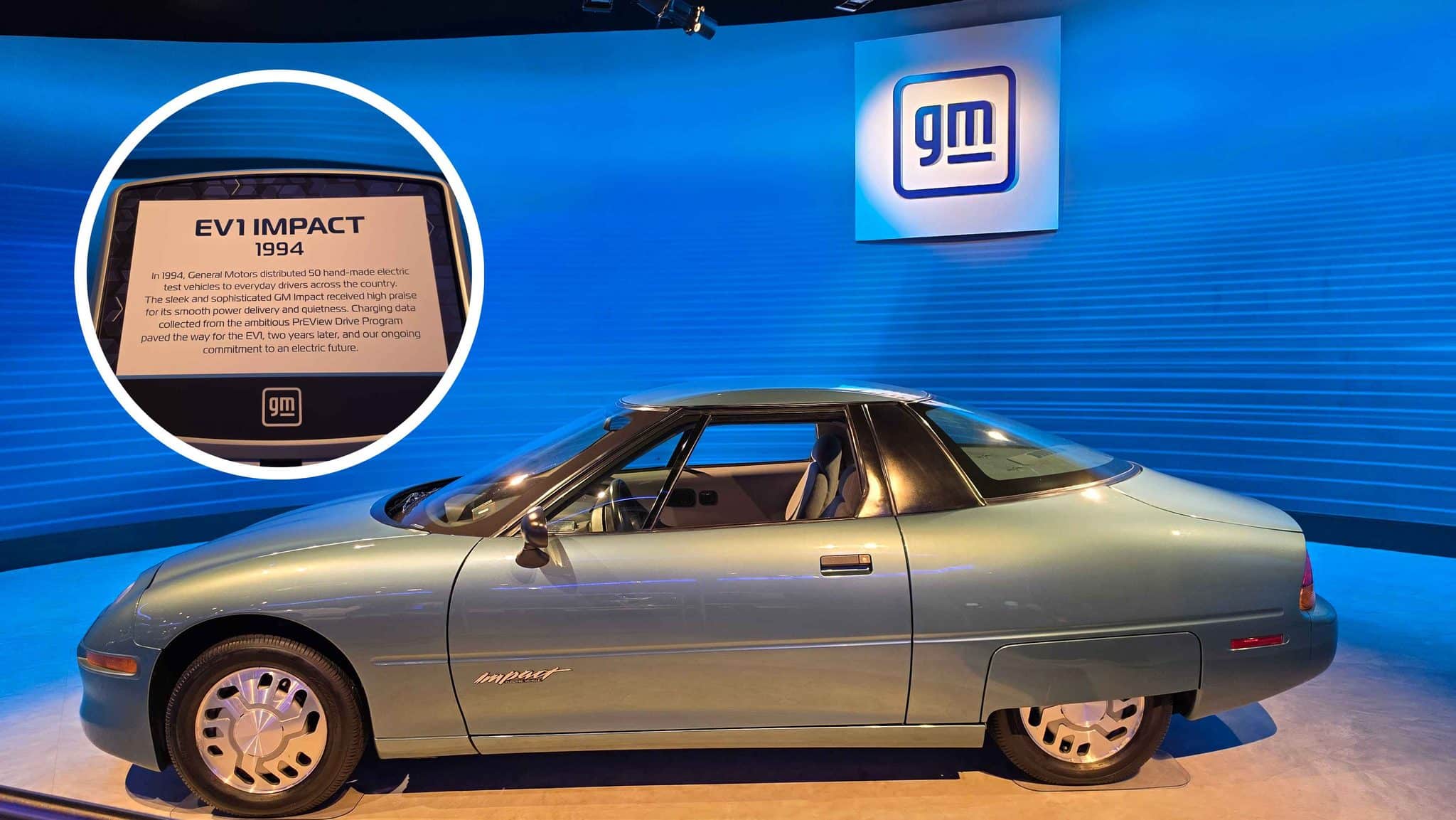
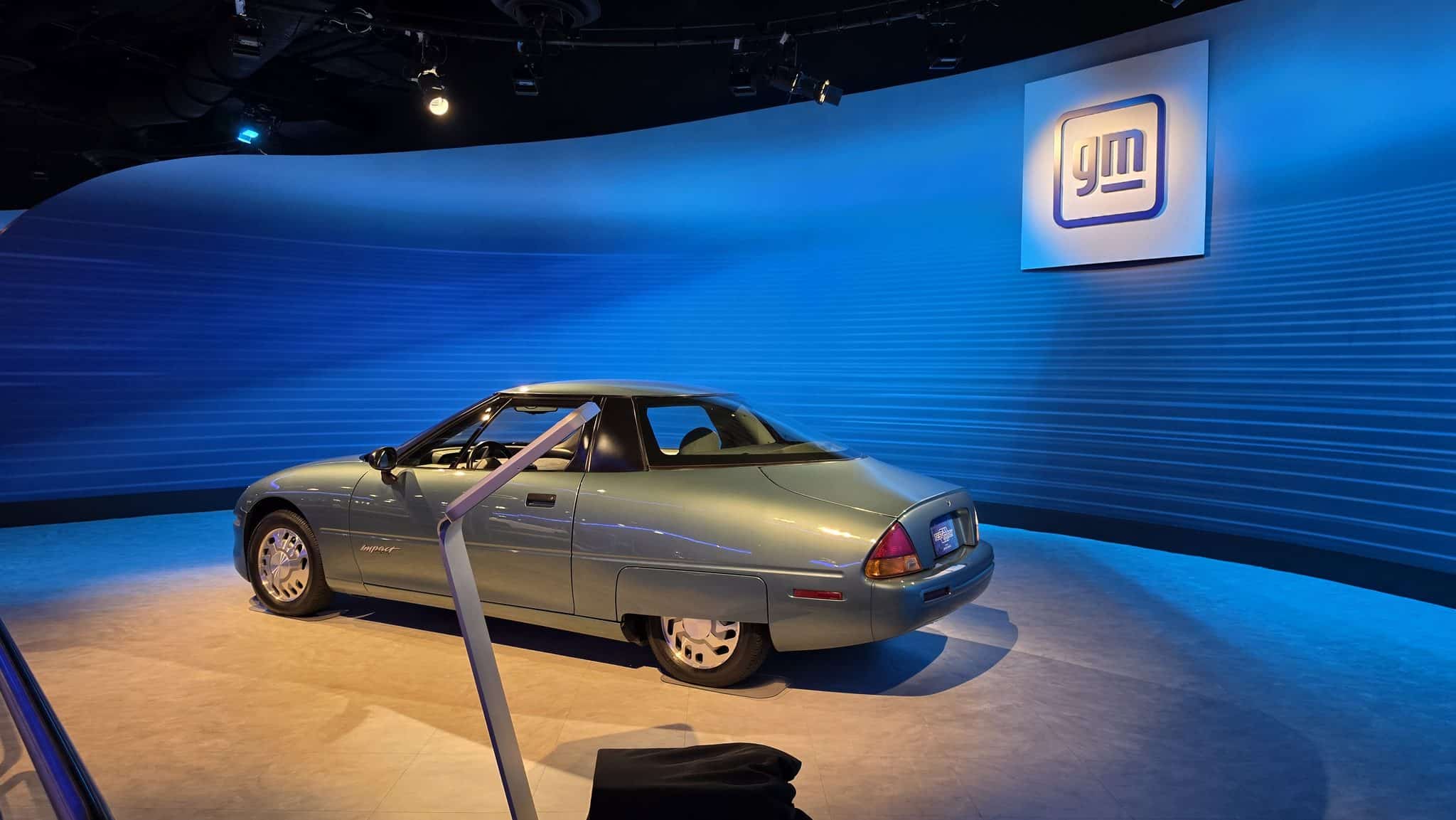
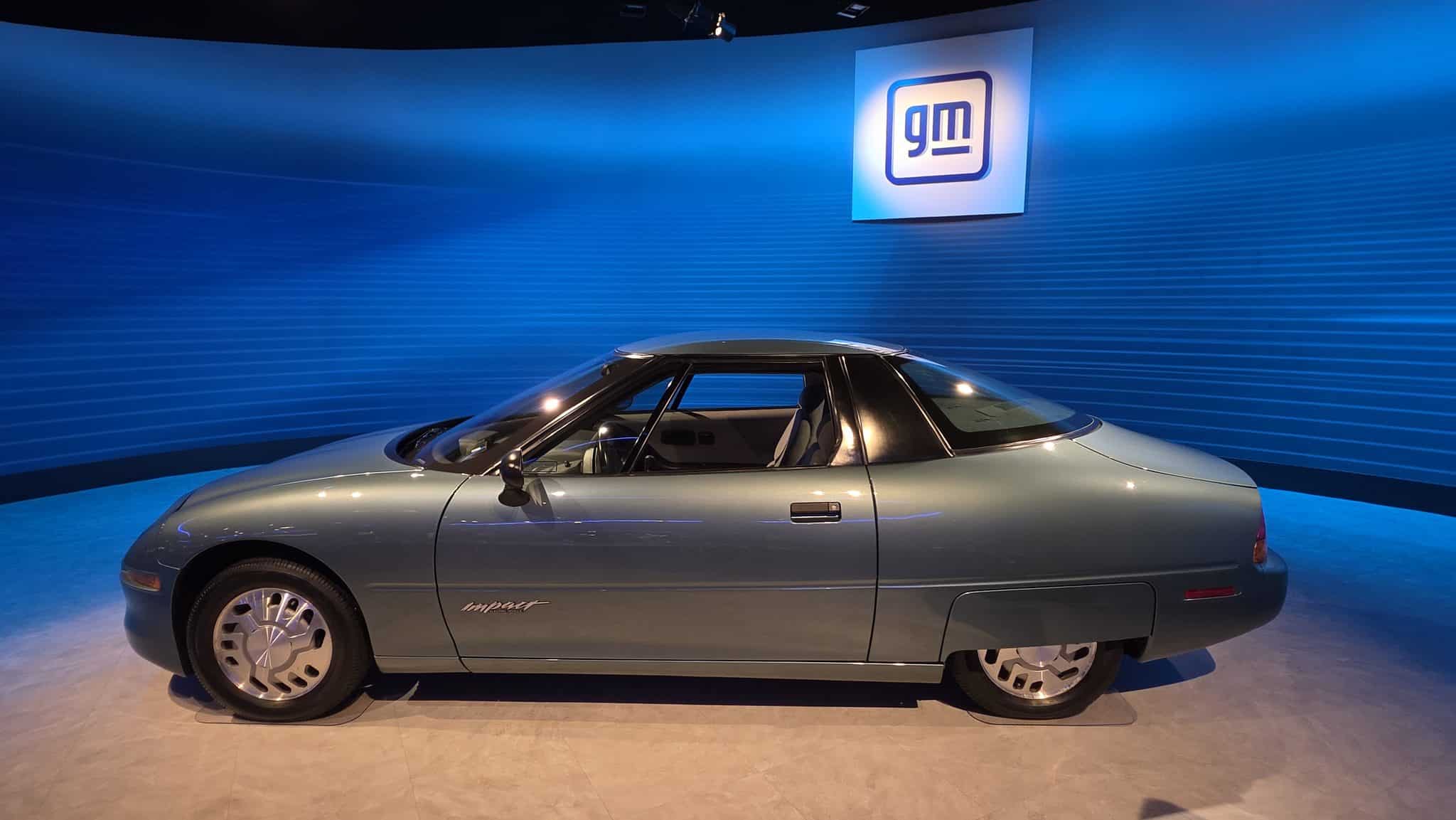
A rare 1994 GM Impact, the hand-built electric test car that led directly to the GM EV1 from the documentary Who Killed the Electric Car?, is now on display at Test Track presented by General Motors in EPCOT at Walt Disney World. Fantasy Land News photographed the car at noon on Sunday, October 25, 2026, parked in a corner of the Test Track exit showroom as guests walk toward the gift shop.
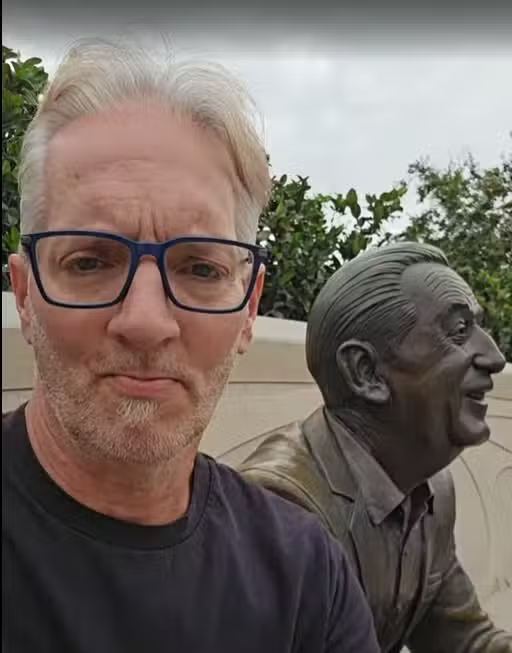
Most Test Track riders walk right past it. I probably would have too if I had not watched Who Killed the Electric Car? when I was younger. I remember being angry at GM after that documentary, and that memory is the only reason this car caught my eye today.
GM branding came back to the building when Test Track reopened at EPCOT in July 2025, and GM refreshed the cars in the exit showroom in early September 2026. Most of the new arrivals are 2026 and 2027 models. This is the one car in the room with a story GM once tried to put behind it. Check out the video below!
What Is the GM Impact at Test Track?
GM’s sign at the display calls the car the “EV1 Impact” and dates it to 1994. The car is not a production EV1. It is the Impact, the test car GM built first. GM debuted the original Impact concept at the 1990 Los Angeles Auto Show, and its shape borrowed lessons from Sunraycer, the solar race car GM had built a few years earlier.
In 1994, GM hand-built 50 Impacts for a program it called PrEView Drive and loaned them to everyday drivers in a dozen U.S. cities. Volunteers needed a garage where the local power company could install a high-current charger. The response blew past GM’s plans. In Los Angeles, the program expected about 80 volunteers and had to shut down the phone lines after 10,000 people called. New York City drew 14,000 callers.
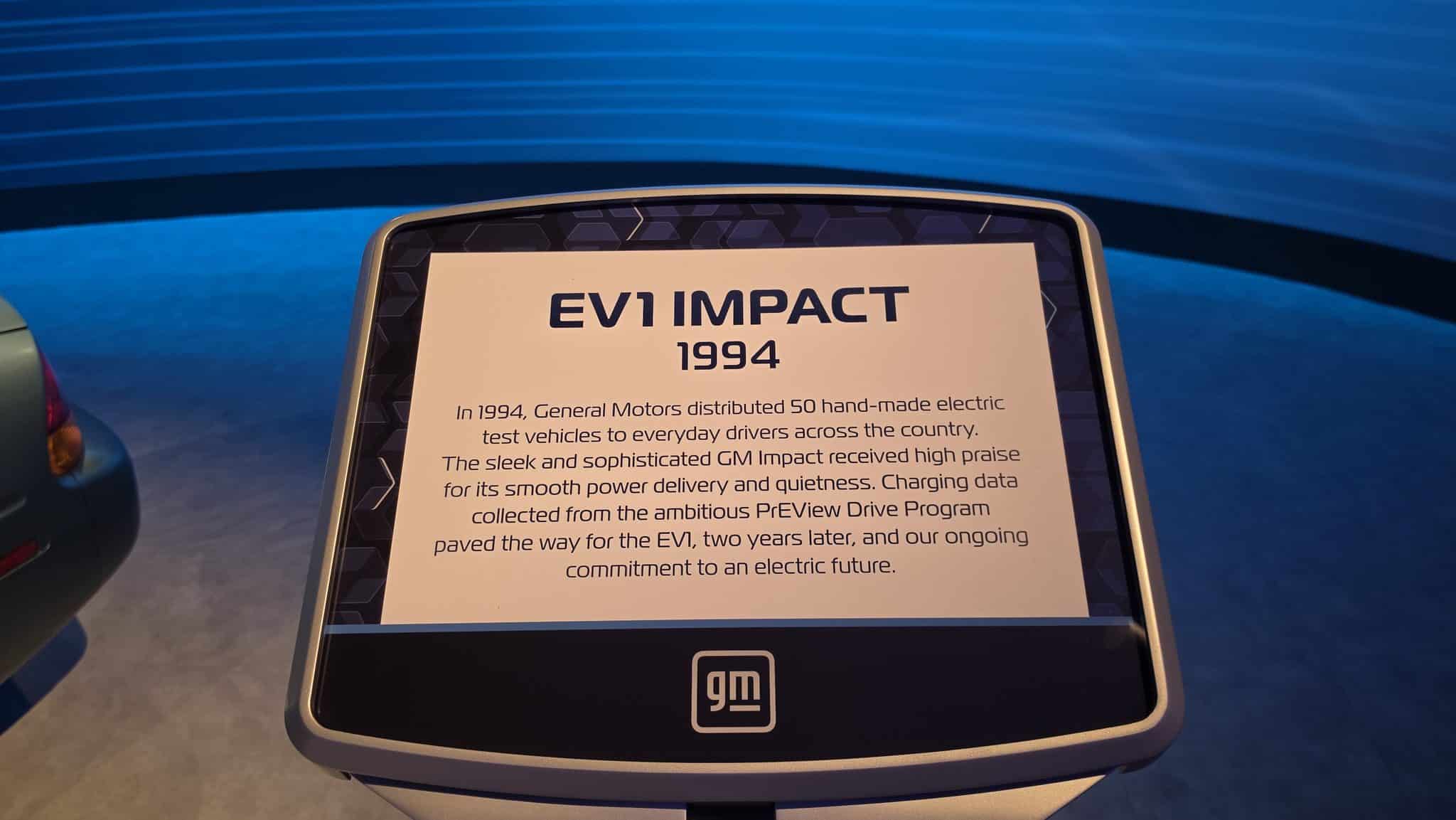
The sign at EPCOT says the charging data GM collected during PrEView Drive paved the way for the EV1 two years later. Look closely and you will see the small “impact” script on the door. Peek through the driver’s window and you can spot the shifter, which has a button labeled Coast Down.
Here is the part that makes this car special. The Petersen Automotive Museum says GM destroyed the 50 PrEView cars after testing wrapped up. Yet GM’s sign dates this car to 1994, the year PrEView Drive began, and it is sitting in a corner at EPCOT. Exactly which Impact this is, and how it survived, are questions we still want answered.
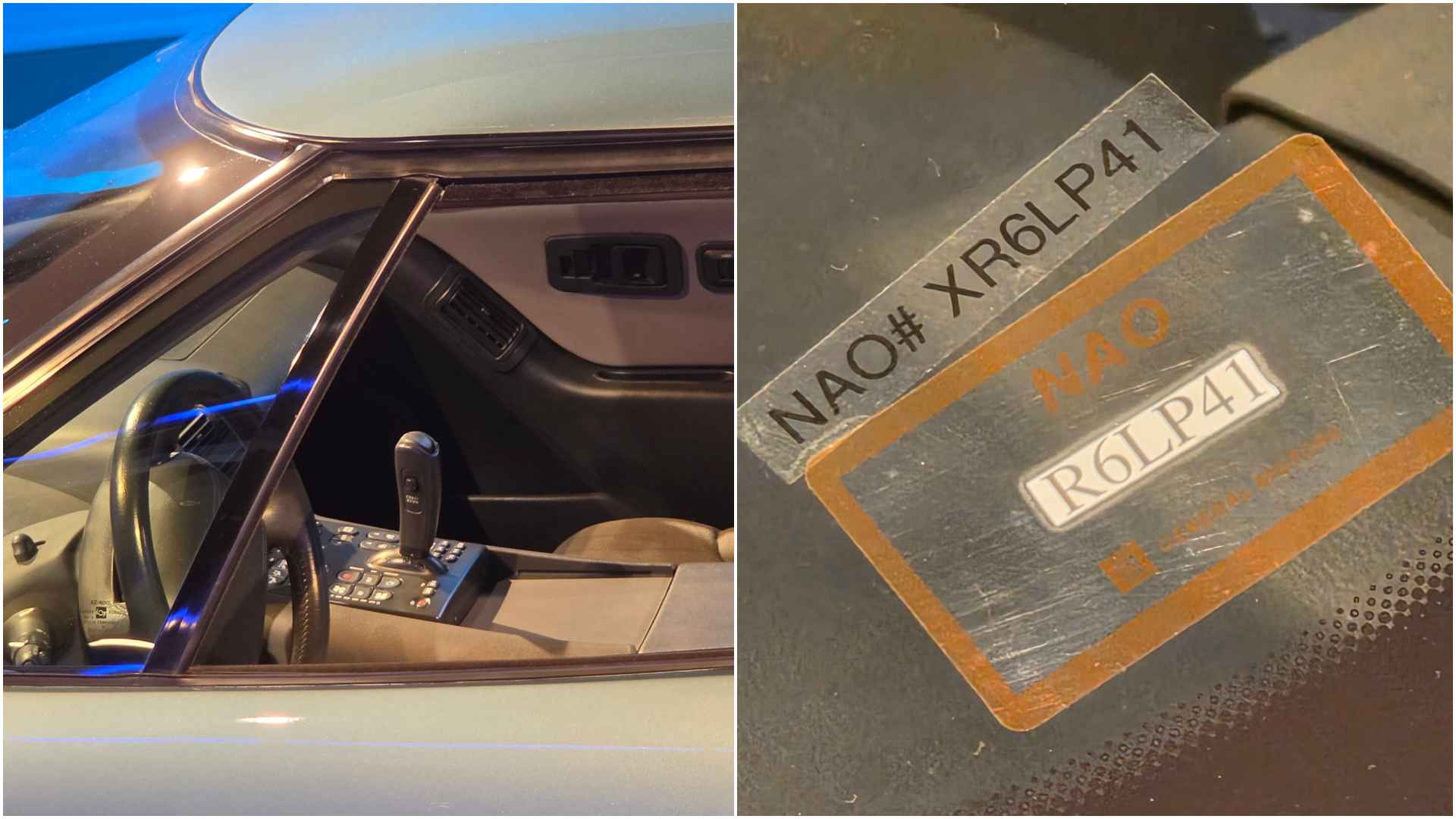
The only identifying tag we could find on the car is an orange General Motors NAO sticker that reads R6LP41, with a printed label beside it that reads NAO# XR6LP41. NAO is GM’s shorthand for its North American Operations, and tags like this are how the company keeps track of its own vehicles. We have not been able to match the code to any public record yet.
Here is our theory. The Beata Collection, a collector group that tracks EV1 parts, calls the 1994 PrEView cars the Limited Production Fleet. That could explain the LP in the code. If we are reading it right, the 41 could be this car’s number in that fleet, which would make it PrEView car No. 41. GM has also long used the letter X on its experimental projects, which could explain the X on the printed label.
GM has not confirmed any of this, so treat it as our best read of the tag and not a fact. But if it holds up, this would be one of the 50 PrEView Impacts that the Petersen says GM destroyed, sitting in plain sight at EPCOT.
How Did a 1994 GM Impact End Up at EPCOT?
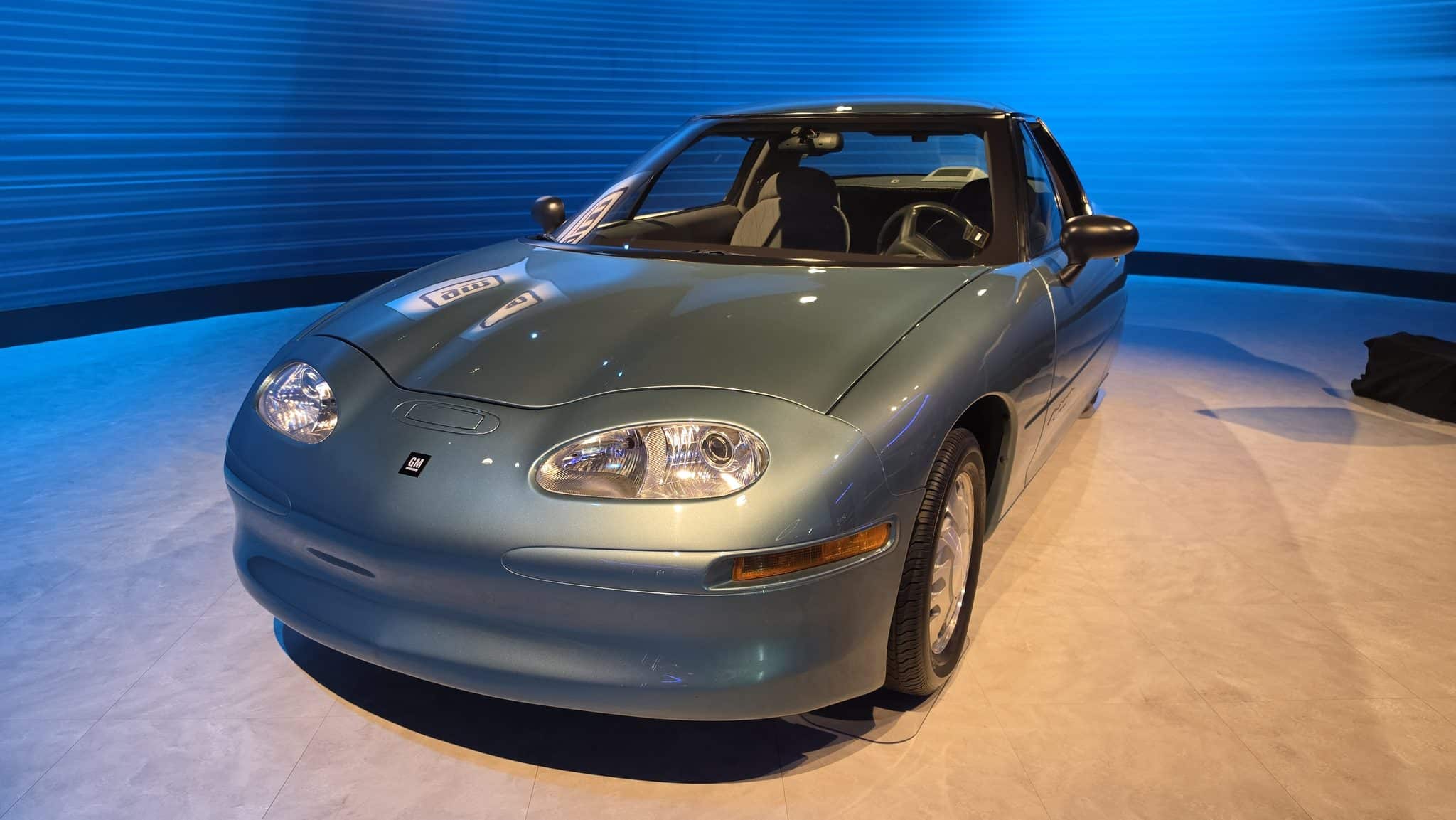
The short answer is GM. The company’s name has been tied to this pavilion since EPCOT opened in 1982, first with World of Motion and then with Test Track starting in 1999. Chevrolet’s name was on the ride from 2012 to 2024, and GM branding returned with the current version of the attraction in 2025. The timing also lines up in a fun way. Disney first revealed back in 1994 that a GM test track ride would one day replace World of Motion. So while 50 Impacts were out on American roads that year, the ride this car now sits in was still just an idea.
GM has not said where this particular car came from. The company keeps a heritage collection of about 600 cars and trucks that includes concept cars and engineering experiments, and that is where a prototype like this one would normally live.
Fantasy Land News emailed Walt Disney World today to ask whether Walt Disney Imagineering was involved in the display or whether GM handled it on its own. We have not heard back yet and will update this story when we do.
Why GM Took Back and Crushed the EV1
The Impact turned into the EV1, which GM built from 1996 to 1999. GM made 1,117 of them, and you could not buy one. GM leased the cars through Saturn dealers to drivers in California, Arizona and Georgia, and the lease blocked any option to purchase even though the car carried a suggested price of about $34,000.
Drivers loved them. The EV1 cut through the air so cleanly that its 0.19 drag coefficient still beats every Tesla and Lucid on the road today. GM ended the program in 2003, pointing to high production costs and a small market for electric cars. As leases ran out, the company took the cars back and crushed most of them. When fans found about 77 surviving EV1s parked behind a GM training center in Burbank, California, they held a vigil to save them. GM trucked the cars away anyway and confirmed they were being recycled.
GM kept about 40 cars, removed their batteries and gave them to museums and universities. That is the story Who Killed the Electric Car? told in 2006. Director Chris Paine, who leased an EV1 himself, premiered the film at the Sundance Film Festival with Martin Sheen as narrator, and Sony Pictures Classics released it in theaters that June. The film pointed fingers at automakers, oil companies and politicians. GM has said the car cost too much to build for too few buyers. Twenty years later, Paine has said the electric car was delayed more than it was killed.
GM’s own leaders have changed their tune as well. Former CEO Rick Wagoner once called killing the EV1 his worst decision, and current GM President Mark Reuss has said canceling the car was a mistake.
The Only EV1 Ever Sold Turned Up in a Georgia Tow Yard
One EV1 slipped through the cracks. EV1 VIN 212 is a green 1997 car. Colorado engineer Jonathan Sawyer, its original driver, had his sister lease it in Tucson and then took it home to Boulder. According to Sawyer, GM kept the car during a service visit and he sued.
The car eventually landed at Clark Atlanta University, where campus police marked it abandoned and had it towed. In October 2025, A-Tow Atlanta got a court order to sell it, and it went for $104,000 through Peak Auto Auctions. With fees, the buyer paid more than $118,000, as The Autopian reported. That made VIN 212 the first EV1 ever legally sold to the public.
Instead of fighting the sale, GM invited the restoration team to tour its Heritage Collection, and Reuss told the team on camera, “Anything you need, we’ll help, we will.” The owner set a goal of having the car running by November 14, 2026, exactly 30 years after the first EV1 drive. Atlanta has its own Impact history too. In late 1995, Georgia Power teamed up with GM to bring PrEView Drive to metro Atlanta, and Emory University employees took turns driving an Impact for two weeks each.
Would Tesla Exist Without the GM Impact?
Tesla’s story runs straight through the car sitting at Test Track, and the link is one engineer. Alan Cocconi designed and built the controller for the original GM Impact. He clashed with GM during the program and went on to co-found AC Propulsion in 1992.
AC Propulsion built a fast electric roadster called the tzero. It caught the eye of Martin Eberhard and Marc Tarpenning, who incorporated Tesla Motors in July 2003. The first Tesla Roadster relied on a power system licensed from AC Propulsion, and Elon Musk has publicly credited the tzero for inspiring it.
The Impact also pushed the whole car industry. GM’s promise to put the Impact into production helped convince California to pass its rule requiring most automakers to start selling zero-emission cars by 1998. That rule put the biggest names in the business to work on electric cars.
So are Teslas around only because of this car? Not only. Better lithium-ion batteries, hybrids like the Toyota Prius and a lot of other engineers played a part too. But Tesla’s family tree has a branch that grows right out of the Impact.
Our Take – Slow down before they reach the Test Track gift shop and find the teal car in the corner. Read the sign. Then remember that GM once crushed nearly every car like it. Seeing it there felt a little sad to me. This car helped start the electric car story GM proudly tells today, and it sits in a corner where most riders walk right by on their way to the gift shop. EPCOT has a habit of hiding history in plain sight, from the giant aquarium that started as a research lab to the small details tucked into its queues, and this car might be the best example yet. The sign talks about GM’s commitment to an electric future and leaves out the crusher. A better spot and a few more lines of the real story would turn this car into one of the best history lessons in the park.
The 1994 GM Impact is on display now inside the Test Track presented by General Motors exit showroom in EPCOT’s World Discovery neighborhood as of October 25, 2026. For more EPCOT and Walt Disney World news, stay with Fantasy Land News. Join the Realm at fantasylandnews.com/the-realm.